Locked In: The Rise of Escape Rooms and Why We Can't Get Enough
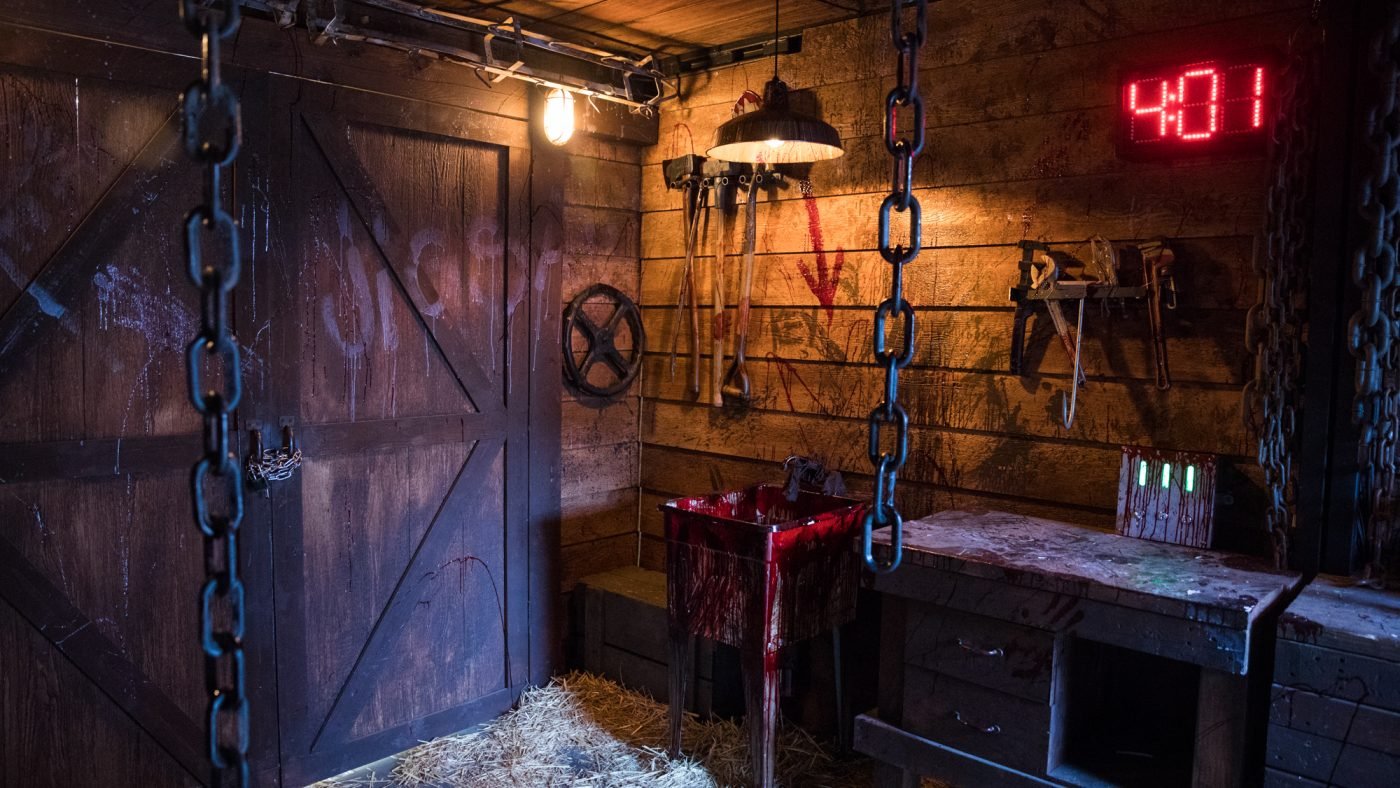
A ticking clock. A locked door. A room full of clues you're not sure are actually clues. And somehow, against all odds, this has become one of the most popular forms of entertainment on the planet.
Escape rooms have gone from a niche curiosity to a global industry worth billions in less than two decades. What started as a video game designer's experiment in a single room in Kyoto has become the entertainment format of choice for birthday parties, corporate team days, first dates, and hen nights alike. As the format continues to evolve, spreading from physical venues into podcasts, virtual platforms, and hosted experiences the appetite for it shows no signs of slowing.
So where did it all come from? And where is it going?
From a Computer Screen to a Kyoto Classroom
Every escape room in the world owes something to a specific moment in 2006. A 35-year-old man named Takao Kato, sitting in a class in Japan, glanced over a friend's shoulder and saw her playing a point-and-click computer game. The premise was simple: you were stuck in a virtual room and had to click around to find clues and solve puzzles until you could open the door and get out.
Kato had been looking for a new kind of event experience. He saw immediately that the concept could work in the real world, with real rooms and real people and a real clock ticking on the wall. A year later, in July 2007, his company SCRAP opened what it called the Real Escape Game in Kyoto. The format was exactly what the name suggested: a live-action version of those point-and-click games, designed for groups of five or six, with one hour to solve their way out.
It was an instant hit. Rooms spread across Japan, then across Asia. By 2011, Europe was catching on, the first escape room outside Asia opened in Budapest, Hungary, a city that would go on to become one of the great global escape room capitals. By 2012, SCRAP had opened in San Francisco, planting its flag as the first escape room in the Americas. By 2014, the format had exploded across the United States and was spreading through the UK, Australia, and beyond.
Today, it is estimated that more than 19,800 escape room facilities operate worldwide. The global market was valued at around $9 billion in 2024 and is projected to keep growing strongly through the decade ahead.
This is not a fad. It is a new permanent fixture of modern leisure.
Why Escape Rooms Work
The obvious question is why. What is it about a locked room and a set of puzzles that captures something so fundamental in the way we want to spend our time?
Part of the answer is simply that escape rooms are genuinely fun. They sit at an interesting intersection: the intellectual engagement of a puzzle, the physical presence of a game you play with your body in a real space, and the social dimension of solving problems together with other people. None of these things are new individually, but the combination is unusual and powerful.
There is also the matter of narrative immersion. The best escape rooms aren't just puzzle boxes; they're stories you walk into. The room is set dressed like a Victorian study, a space station, a hospital that closed under mysterious circumstances. You're not just solving abstract puzzles; you're playing a character in a scenario, and every clue you find moves the story forward. That sense of being the protagonist of your own adventure, with a clock adding genuine stakes, is remarkably compelling.
Then there is the team dimension. Escape rooms are almost always played in groups, and they require real collaboration rather than the performed collaboration of a work meeting, but genuine coordination of different skills and perspectives under pressure. Some puzzles need lateral thinking; some need methodical logic; some reward the person who notices the detail everyone else walked past. Different people shine in different moments. This is why the format works so well for corporate team building: it surfaces how people actually operate together in a way that no workshop or offsite quite replicates.
The Pandemic Pivot: When Escape Rooms Had to Escape
The industry's trajectory wasn't entirely smooth. When the COVID-19 pandemic forced physical venues to close, the escape room industry faced an existential challenge. You cannot easily run a locked-room physical experience when people can't be in rooms together.
The response was creative and, in retrospect, genuinely important for the long-term evolution of the format. Operators pivoted to virtual escape rooms; online experiences where groups connected via video call and worked through digitally recreated environments. Some of the most innovative versions involved a live game master physically present in the actual room, wearing a camera and acting as the team's eyes and hands, following their instructions in real time. Teams would direct them: "look behind the painting," "try the combination again," "open the drawer on the left" an unexpectedly intimate and entertaining format that preserved much of the tension and humour of the physical experience.
These virtual formats did more than keep the industry alive through lockdowns. They opened escape rooms to audiences who had never previously been able to access them such as remote teams whose colleagues were scattered across cities or countries, people with mobility limitations, and groups for whom travelling to a venue was simply impractical. The pandemic forced an innovation that turned out to expand the market rather than merely substitute for the real thing.
The physical industry has since stabilised at a healthy level, with around 2,000 facilities in the United States alone and consistent revenue growth globally. The virtual and hosted formats, meanwhile, have become a permanent and growing part of the ecosystem.
Escape This Podcast: The Escape Room Without the Room

Perhaps the most inventive evolution of the escape room concept is what's happened in the world of podcasting — and no example is more compelling than Escape This Podcast.
Launched in May 2017 by Australian hosts Bill Sunderland and Dani Siller, Escape This Podcast does something that sounds like it shouldn't work: it delivers a fully playable escape room as an audio experience. Each episode, Dani creates a new room, complete with setting, narrative, puzzles, and clues and Bill and other guests play through it on air. The result sits somewhere between a tabletop roleplaying game, a text adventure, and a live puzzle game, with the added pleasure of listening to real people attempt to reason their way through problems in real time.
The key structural insight of Escape This Podcast is that the rooms are genuinely playable by listeners at home. Each episode is accompanied by visual puzzle materials on the website, and the design of the puzzles accounts for the fact that players are working from descriptions and images rather than physical props. In some ways, this is a stricter creative challenge than designing a physical room as every puzzle has to be solvable through information alone, with no benefit of atmosphere, weight, or tactile discovery.
What the show demonstrates, across hundreds of episodes and counting, is that the escape room is ultimately a narrative and puzzle design format rather than a physical one. The locked room is a container for a certain kind of experience. The container can take many shapes.
This idea that you don't need a venue, props, or specialist equipment to run an engaging escape room is one of the most liberating insights to come out of the format's creative evolution.
The Rise of the Hosted Experience
The podcast model points toward something broader: the growing appeal of hosted escape room experiences, where a facilitator brings the game to you rather than the other way around.
Traditional escape rooms require you to travel to a venue, book in advance, pay per head, and work within the constraints of the specific room design. For corporate groups, this often means additional logistics; transportation, venue hire for the debrief, catering, and the challenge of managing large groups in spaces designed for six to eight people.
The hosted model inverts this. The experience comes to you. A game master arrives at your office, your event space, or your living room and runs an escape room scenario designed for your group size and context. The puzzles are facilitated rather than self-directed. The experience is curated around your team. The hosted escape room can also be run virtually for those teams who work remotely or are geographically separated.
This matters for several reasons. It removes the logistical friction that makes venue-based escape rooms complicated for large groups. It allows the host to customise the difficulty and tone in real time; making things harder if the group is breezing through, easing off if the energy needs to stay fun rather than competitive, providing ‘nudges’ and ‘tips’ if the team is struggling. Being based on an office or virtually also allows for easier debriefing and reflection that turns a good time into something genuinely useful for team development.
The hosted format also solves one of the traditional limitations of the escape room: group size. Most physical venues cap at six to eight people per room, which means a team of twenty either splits into groups that have completely separate experiences, or doesn't do it at all.
Whole a hosted experience still has some of this challenge the experience can be adjusted more readily for different sized groups. Most exciting is offering the same room across teams who have varying availabilities and locations with a debrief session that brings everyone back together at the end to find out who was fastest to solve the room but more importantly to share experiences and anecdotes from the escape room.
What Comes Next
The escape room industry in 2025 is not the industry of 2015. The early period of explosive growth where almost any room with a padlock and a combination lock could find an audience has given way to a more mature market where design quality, narrative ambition, and production value are what differentiate the best operators from the rest.
Over 42% of global operators have upgraded their lighting and sound systems for more cinematic experiences. Multi-room adventure formats grew by 28% between 2023 and 2025. Horror-themed rooms, immersive actor-led experiences, and hybrid physical-digital formats are all expanding.
The corporate and team-building segment in particular is growing rapidly, as organisations look for team experiences that are more engaging than a dinner out but more accessible and flexible than a full-day offsite. The hosted escape room brought to the workplace, tailored to the team, facilitated by an expert sits in exactly the right space for this demand.
And at the more experimental end of the spectrum, creative practitioners like the team behind Escape This Podcast continue to show that the format can live in audio, in print, in digital platforms, and in facilitated experiences that require nothing more than a good puzzle designer and a group of willing participants.
The escape room was born as a real-life version of a video game. What it has become is something larger: a flexible, endlessly adaptable format for bringing people together around shared problem-solving, narrative, and the specific pleasure of thinking hard as a team. That core appeal isn't going anywhere.
Experience It With Us
At The Travelling Game Café, we have partnered with Dani and Bill from Escape this Podcast to run hosted escape room experiences that come directly to your Melbourne workplace or event space. Our in-person sessions start from $300 for groups of four, and our online escape rooms are available from $200 — designed specifically for remote and hybrid teams, with no specialist platforms needed.
If you've never done an escape room, or you've done plenty and want to try the hosted format, we'd love to show you what a difference a great host makes.