From Jenga to Kabuto Sumo: How Dexterity Games Grew Up
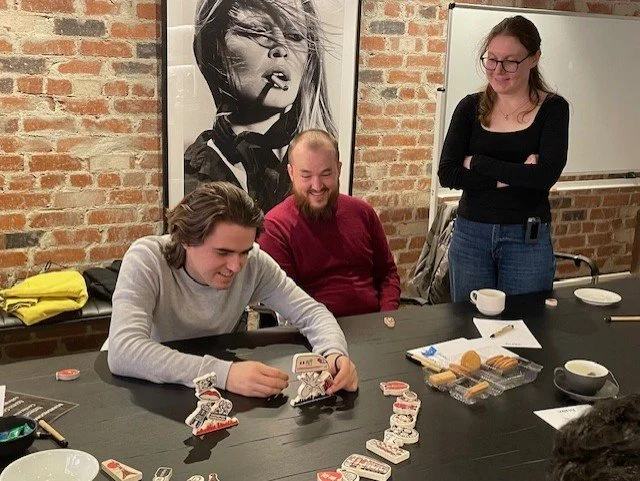
Dexterity games are a new fun way to connect teams and create a memorable event
You've played Jenga. Almost everyone has. You've felt that particular dread as the tower grows taller and wobbles more with every turn, the collective held breath as someone extracts a block from somewhere it absolutely should not come from, and the eruption of noise when the whole thing finally comes down.
That feeling; the shared tension, the physical drama, the laughter and groans, is precisely why dexterity games can bring something unique to a games night or team event.
Jenga remains the most recognised entry point into the genre, the world of dexterity gaming has grown into something extraordinary. The variety, the creativity, and the sheer quality of what's out there now would genuinely astonish anyone whose only frame of reference is that wobbling wooden tower.
This is the story of how we got here.
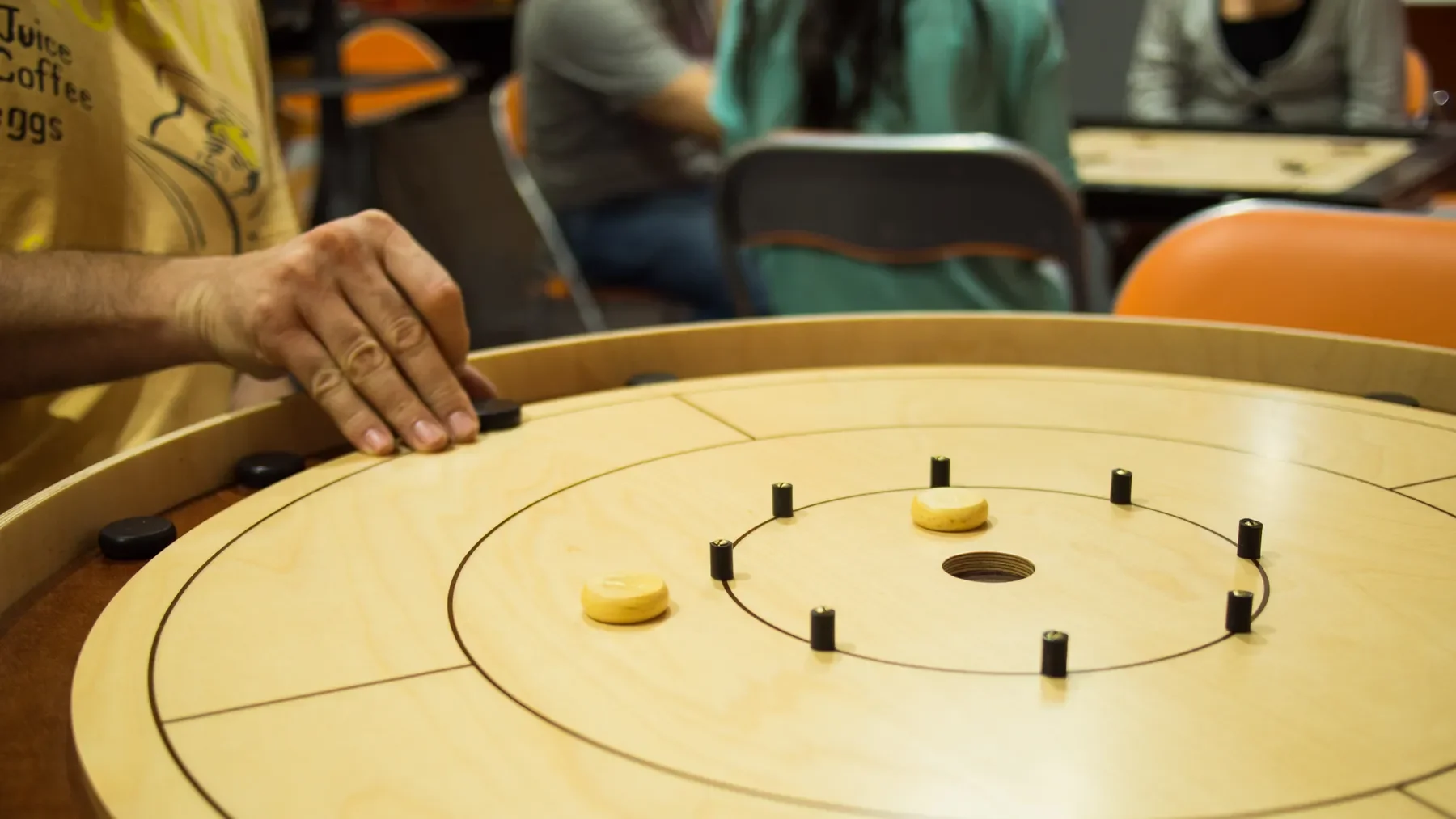
Crokinole is a classic game - easy to learn in two minutes and deceptively tricky and will have you coming back for more
Where It Began: The Classics
Dexterity games are not a modern invention. Long before Jenga appeared on shelves in 1983, people were playing games that demanded physical skill over mental calculation.
Crokinole dates back to 1870s Canada and remains one of the finest dexterity games ever made. Played on a large circular wooden board, players flick wooden discs toward a central scoring hole while simultaneously trying to knock their opponent's pieces out of position. The rules are elegant, the skill ceiling is remarkably high, and a well-crafted Crokinole board is practically a piece of furniture. Competitive Crokinole still has dedicated tournaments today, over 150 years after the game's invention.
Then came Jenga, and everything changed in terms of public awareness. Leslie Scott's brilliantly simple design; a tower of wooden blocks, one removed per turn and placed on top, introduced the genre to millions of households worldwide and is regularly found in bars and venues in a giant format.
Its genius is in how universal and immediate it is. No rules explanation required. No strategy to learn. You look at the tower and you understand. You take a block and you understand even more.
Jenga didn't just become popular; it became a cultural shorthand for a certain kind of shared, physical, laughably tense experience.
But for all its brilliance, Jenga is just one idea. For decades, the broader potential of dexterity gaming sat largely unexplored in mainstream consciousness. That's what makes the last fifteen to twenty years so remarkable.
The Genre Finds Its Range
The modern renaissance of dexterity gaming hasn't produced one dominant style. It has produced many, and that variety is the whole point.
Stacking games evolved
Jenga proved people loved the anxiety of a growing, unstable structure. Designers took that anxiety and added layers.
Games like Little Tokyo also appeared and refined the concept beautifully: a shared cityscape onto which players carefully place different sized and shaped figures with decisions about where and what to place giving the physical challenge genuine strategic depth while losing none of the fun.
It's recognisably descended from Jenga, there's a structure, there's precariousness, there's dread, but it's a completely different game. In addition, it's gorgeous on the table, which matters more than people admit.
Flicking and launching found their voice
A different branch of the family tree grew from traditions like Crokinole and tabletop shuffleboard. Pitch Car brought the flicking mechanic into a modern age, with a racing game where the players are the engine and the driver where your success is based on your own skill and a bit of luck. Games like Pitch Car understand that the physical act of a well-executed flick, the snap of the finger, the satisfying trajectory of a disc is inherently pleasurable, and they built whole experiences around that pleasure.
Precision took on new forms
Tinderblox is a masterclass in constraint as a design tool. Players build a miniature campfire following card instructions, placing tiny logs and flame tokens but they must use the included tweezers to do it. That single rule transforms everything. Your hands become unreliable. Your breathing becomes a variable. A fifteen-minute game feels like it lasts an hour of concentrated, sweating focus.
The tweezers turn a familiar stacking challenge into something almost surgical, and the tin it comes in is smaller than most wallets. Constraint, it turns out, is a spectacular creative tool.
Pushing and shoving entered the arena
Kabuto Sumo, one of the most inventive dexterity games of recent years, took a completely different approach. Players are giant sumo wrestling kabuto beetles, pushing wooden discs of different shapes around a circular arena, trying to knock their opponent off the edge.
Each beetle has a unique set of pieces and the way different shapes interact creates emergent, unpredictable physics that no amount of planning can fully anticipate.
It's chaotic and joyful and surprisingly tense, and the theme and design of the playing area create a truly engaging experience. The connection to Jenga or Crokinole is philosophical rather than mechanical, it's a dexterity game in the sense that your hands do the work and physics is the referee, but it shows just how wide the genre's tent has become.
What's Actually Changed
Looking at the arc from Jenga to the games being designed today, a few shifts stand out as genuinely significant.
The physical components became part of the design. Early dexterity games used components as functional objects; the wooden blocks in Jenga are interchangeable, identical, deliberately neutral. Modern dexterity games treat the components as expressive. The irregular shapes of Kabuto Sumo's discs are the game's central mechanic. The tweezers in Tinderblox are its defining rule. The different shapes in Little Tokyo bring a new strategy to the table. Designers stopped thinking of components as vessels for gameplay and started thinking of them as gameplay.
The genre stopped apologising. For a long time, dexterity games existed slightly outside the serious hobby space. They were gateway games, party games, kids' games. Something fun, but not much more than that. That perception has largely dissolved. Dexterity is now recognised as a legitimate design space capable of producing experiences that can't be replicated any other way.
Skill and competition become the focus. Crokinole is where this all started and the reason it is still popular today is due to the skill involved coupled with that touch of luck which any competitive game benefits from. That desire to have ‘one more game’, the control you have over your own destiny, and the excitement and bragging rights at the unlikely final shot which gives you the win cannot be underestimated. Games like Crokinole or Pitch Car lend themselves well to tournaments or leagues which bring a connectivity and shared experience many games struggle to deliver.
The scale diversified dramatically. From Tinderblox in its matchbox tin to a full-size Crokinole board, dexterity games now exist across every possible form factor. That's not a trivial point and it means there's a dexterity game for every occasion, every group size, and every table.
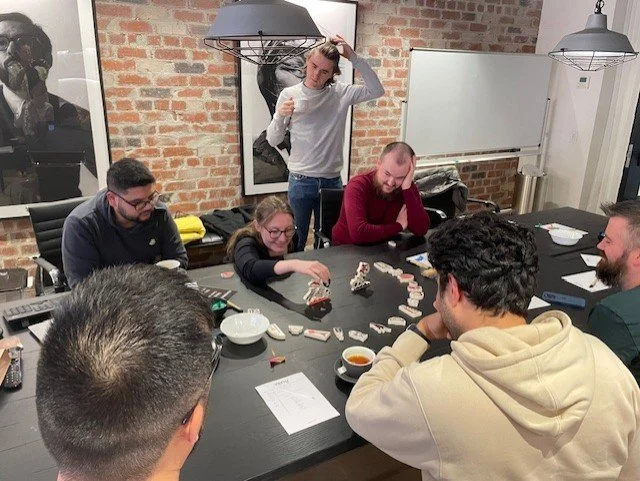
Why this matters for your next team event
Dexterity games have always had one quality that makes them exceptional in a social setting: they look fun from across the room and the laughter and excitement they create draw people to them.
The physical drama is visible. The tension is legible without context. Someone hovering tweezers over a teetering campfire or holding their breath as they place a piece on an already overloaded rooftop are comprehensible human moments that don't require knowledge of the rules to understand.
That's what Jenga gave the world in 1983, and what decades of creative design have since expanded into a full universe of experiences. The wobbling tower taught us that physical games create something that card games and board games often can't: a shared, embodied, un-outsourceable moment. You can't think your way out of it. You have to actually do it.
And the more varied and sophisticated the genre becomes, the more of those moments there are to discover.
Where to Start
If Jenga is the only dexterity game you've played, here's a rough map of where to go next:
If you loved the tension and the tower — try Little Tokyo or Tinderblox. Both build on the stacking tradition but layer in decisions and constraints that make the experience feel completely fresh.
If you want something with competitive depth and a high skill ceiling — Crokinole is the answer. It will take a few games to find your shot, and then you'll want to keep playing until you've found a better one.
If you want chaos, personality, and something nobody at the table has seen before — Kabuto Sumo is the game to set up. Watch what happens when you explain that everyone is a beetle doing sumo with wooden shapes. Then watch what happens when someone's carefully constructed attack sends three discs flying off the board at once.
The wobbling tower was just the beginning. Come find out what came next.