10 Board Games Every Melbourne Office Should Try (And Why)
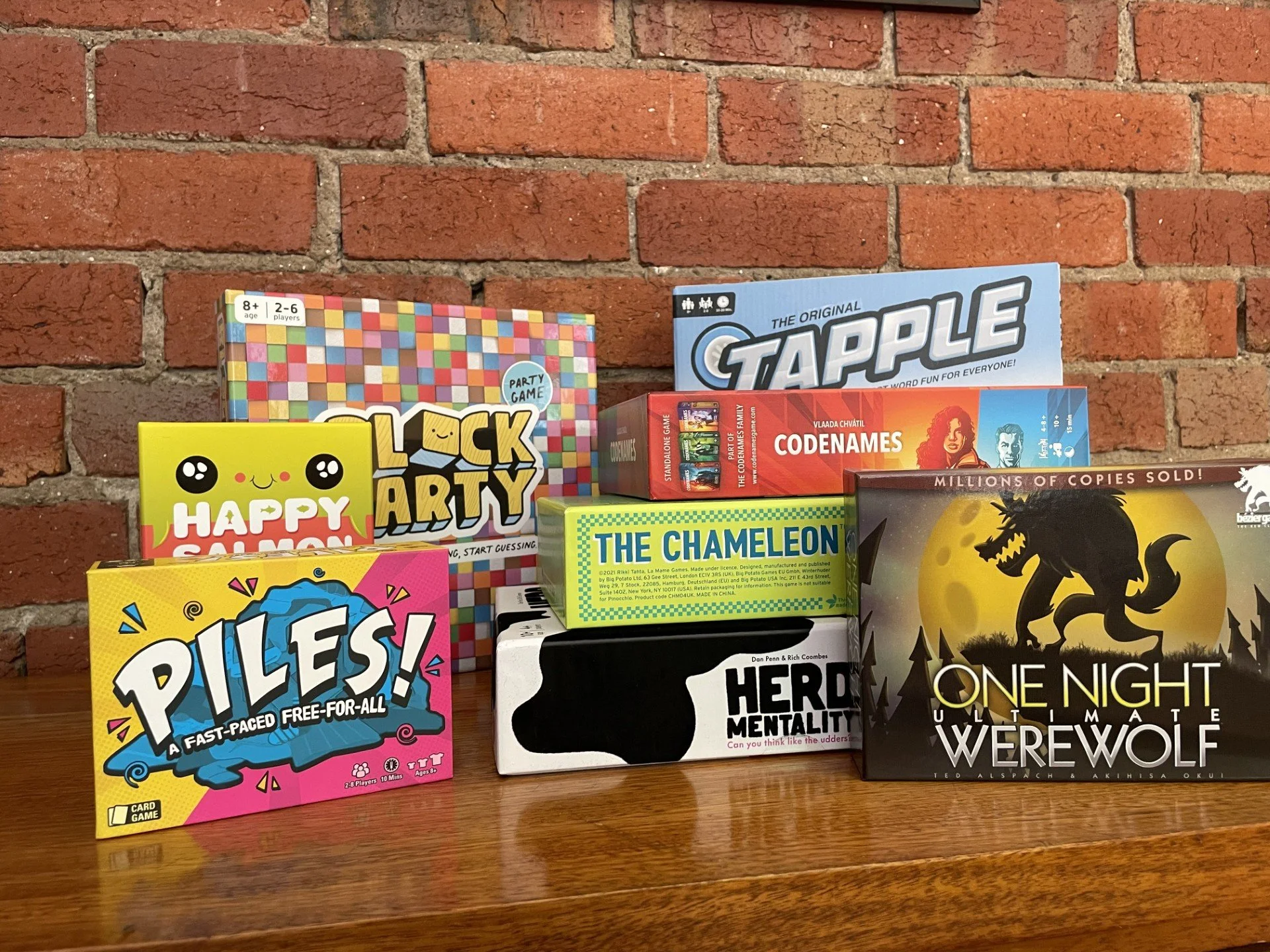
There are a huge amount of games available - but which one is right for you and your team?
Not all board games are created equal — and most weren't designed with a conference room full of colleagues in mind. These ones were made for exactly that kind of group.
The board game renaissance of the past decade has produced thousands of titles. Narrowing it down to what actually works in a workplace context — mixed experience levels, limited time, and a need to include rather than exclude — takes some curation.
Here are ten games that consistently deliver in corporate settings, with notes on why each one earns its place.
1. Codenames
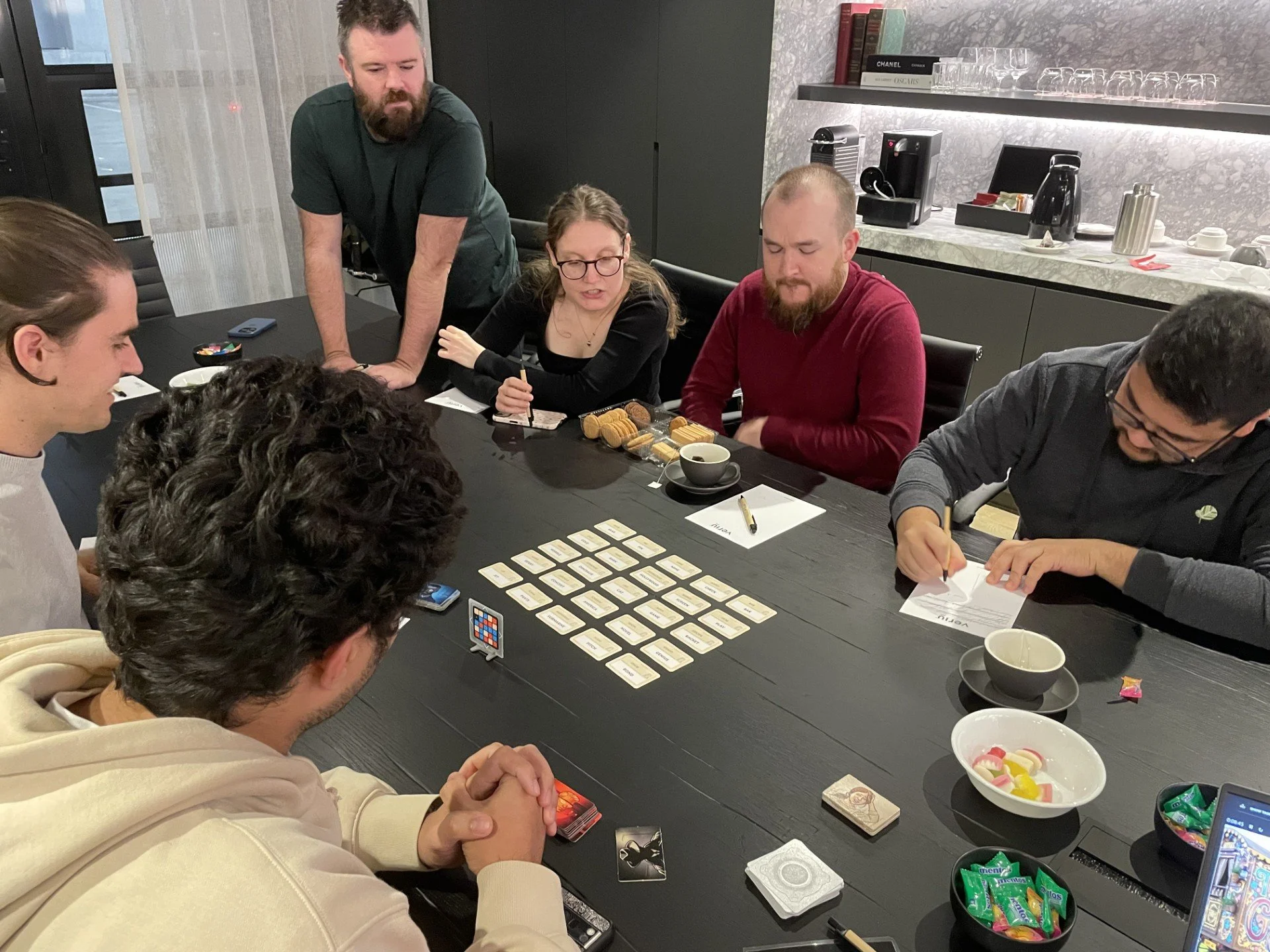
Players: 4–8 (can scale to larger with teams) | Time: 20–30 minutes | Difficulty: Easy
Codenames is one of the most-played party game in professional settings for good reason. Two rival spymasters give one-word clues that connect multiple words on the board. Their teams try to guess which words the clue is pointing to.
Why it works for offices: It creates genuine debate and reveals how differently people associate ideas. The person who thinks "cloud" connects "storage," "weather," and "dream" will be baffled that nobody else saw it. This is both hilarious and genuinely revealing about how colleagues think.
2. Wavelength
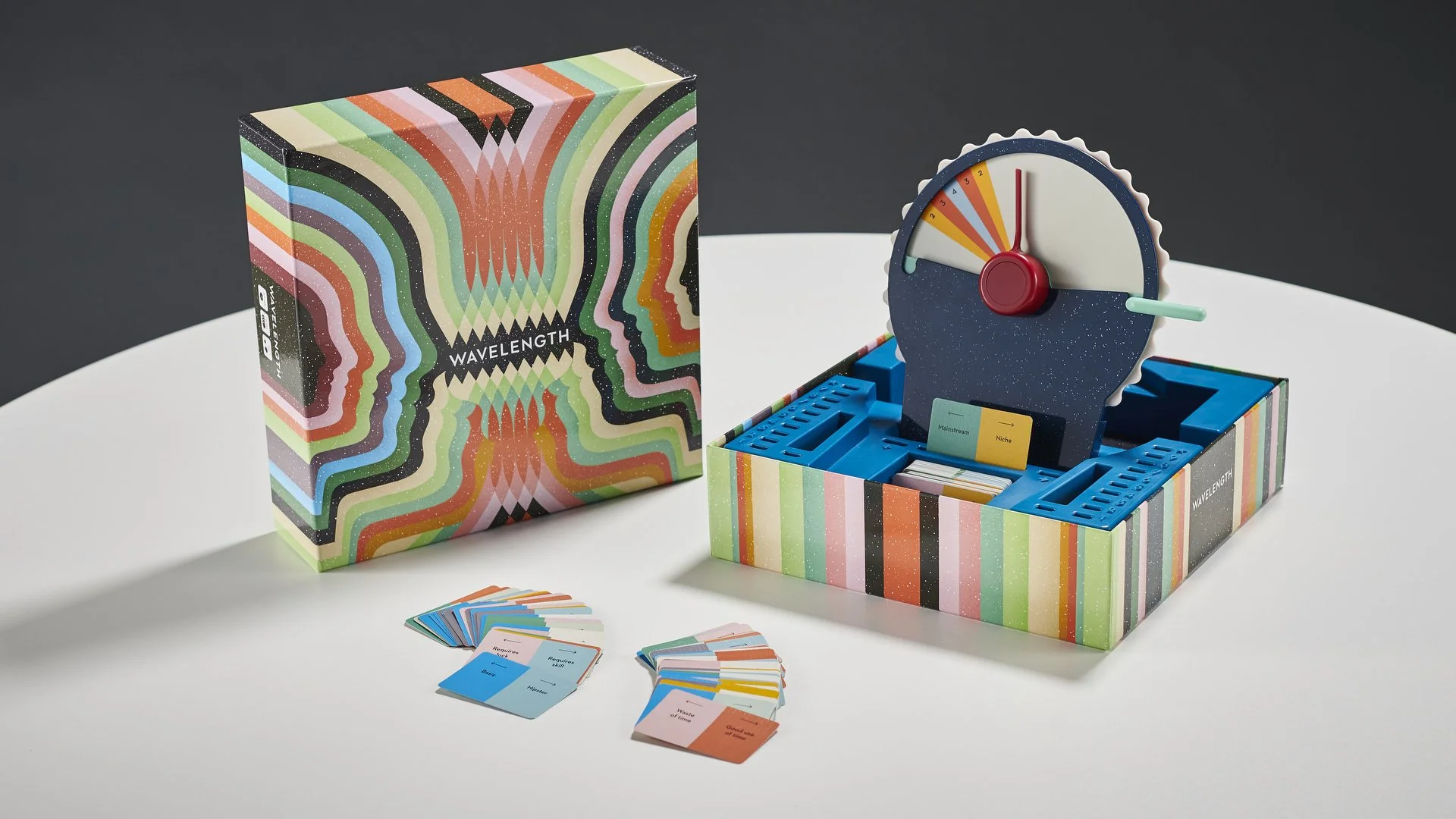
Players: 2–12 (can scale to larger with teams) | Time: 30–45 minutes | Difficulty: Very easy
A psychic tries to calibrate their team's thinking by giving a clue that positions a hidden target on a spectrum (Hot ↔ Cold, Famous ↔ Infamous, Scary ↔ Not Scary). The team debates where the answer falls while their opponents decide whether they are right or wrong.
Why it works for offices: The debate is the game. You learn an extraordinary amount about your colleagues' worldviews from watching them argue about whether a parking fine is closer to "bad" or "very bad" on the consequence scale. Completely inclusive, no prior knowledge required, and naturally funny.
3. Monikers
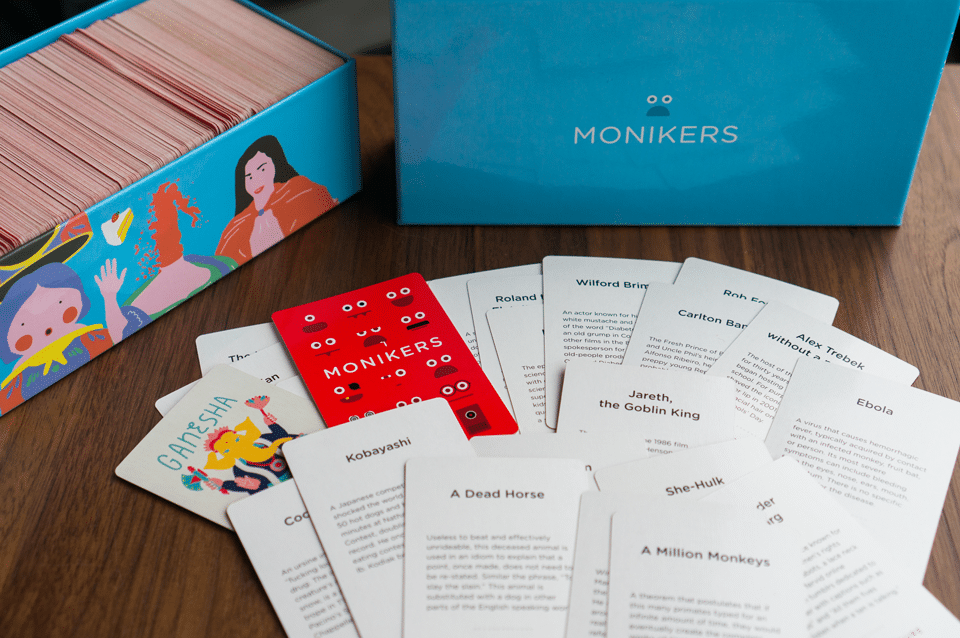
Players: 4–16 | Time: 30–60 minutes | Difficulty: Easy
A team based game in which teams go head to head in trying to guess celebrities, things and memes. You even get to guess the same answers over three rounds so everyone already knows all the answers – however each round gets trickier; first you can say anything but the answer, second time round you can only say one word, and in the final round you can’t say anything.
Why it works for offices: Monikers is one of the simplest and most effective ice breakers out there. Every round uses the same answers which is a huge equaliser as everyone knows the answers already. Guaranteed to create ‘in jokes’ as the game progresses – one of those games which just gets everyone laughing and battling to win.!
4. Blood on the Clocktower
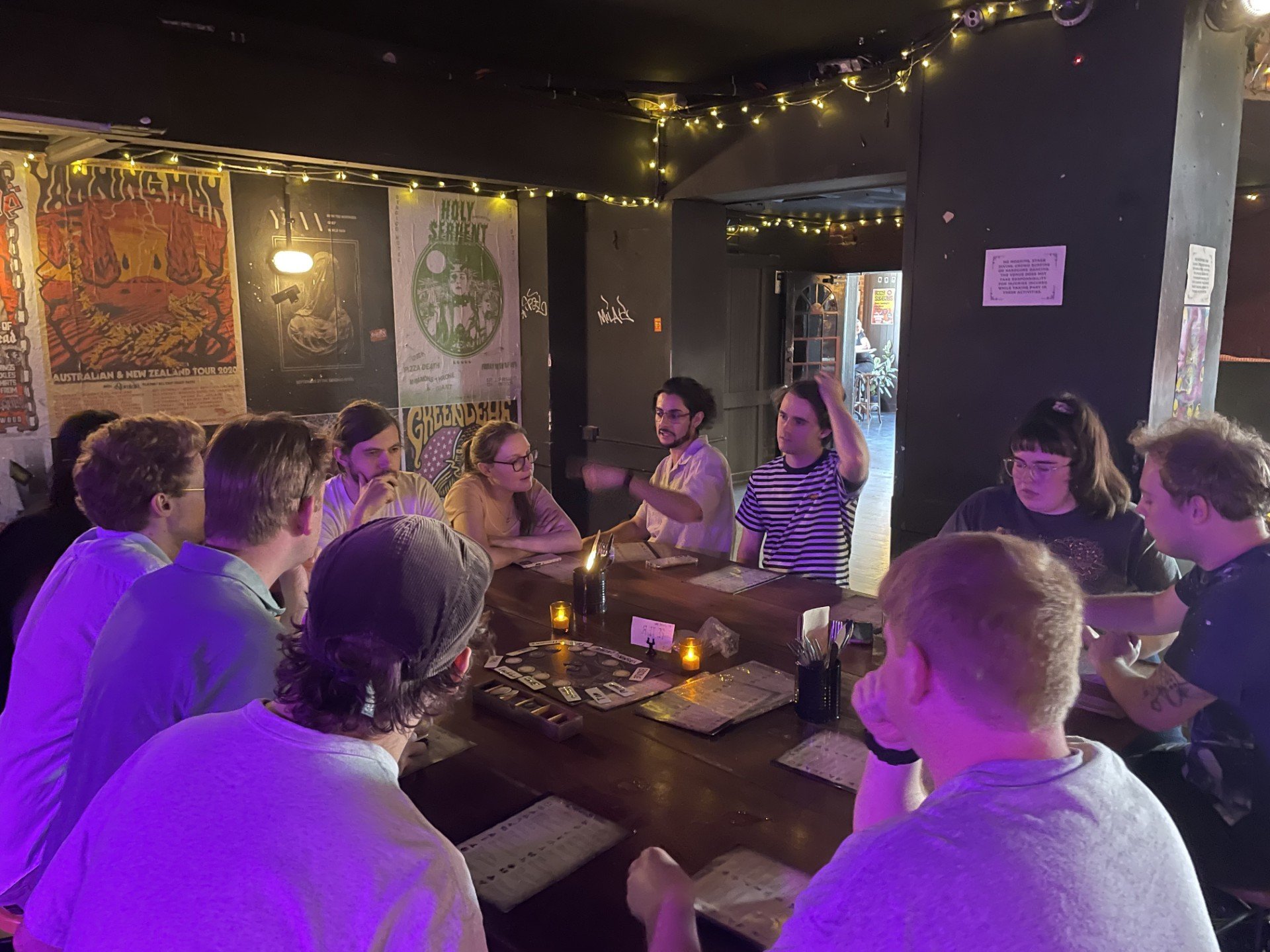
Players: 7-15 | Time: 90- 120 minutes | Difficulty: Medium
Blood on the Clocktower is in the ascent with the success of TV shows like The Traitors, being mentioned as a favourite by the Stranger Things cast to many YouTube videos of celebrities and influencers playing.
Participants are secretly divided into Good and Evil teams, each with unique roles and abilities. Through discussion, analysis, teamwork and social skills players need to either kill the Demon for Good to win, or keep the Demon alive for the Evil team to claim the victory.
Why it works for offices: If you have the time and the team to play this is an amazing experience. It is inclusive of all personality types, encourages communication and strategic thinking all while being immense fun.
5. Herd Mentality
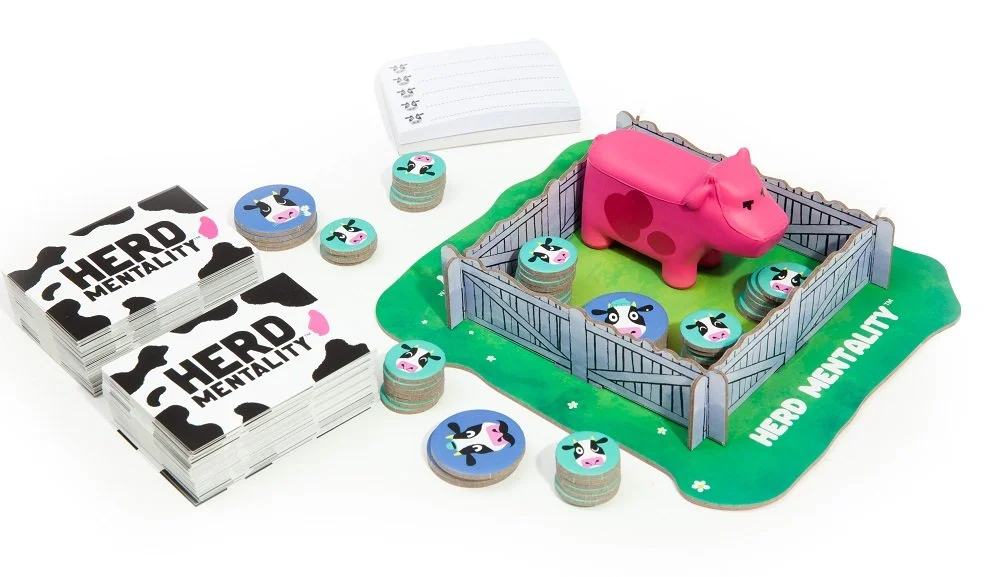
Players: 4–lots| Time: 20–30 minutes | Difficulty: Easy
Herd Mentality requires players to think of what the majority will answer rather than what they think is the ‘right’ answer. If you’re the only one to give a certain answer you gain the dreaded Pink Cow. While you hold the Pink Cow you cannot win the game so you better hope someone else stands outside the herd soon!
Why it works for offices: Quick to learn, and as there are no ‘right’ answers everyone is on an equal footing and no one feels left out which can often happen with trivia games.
6. Block Party
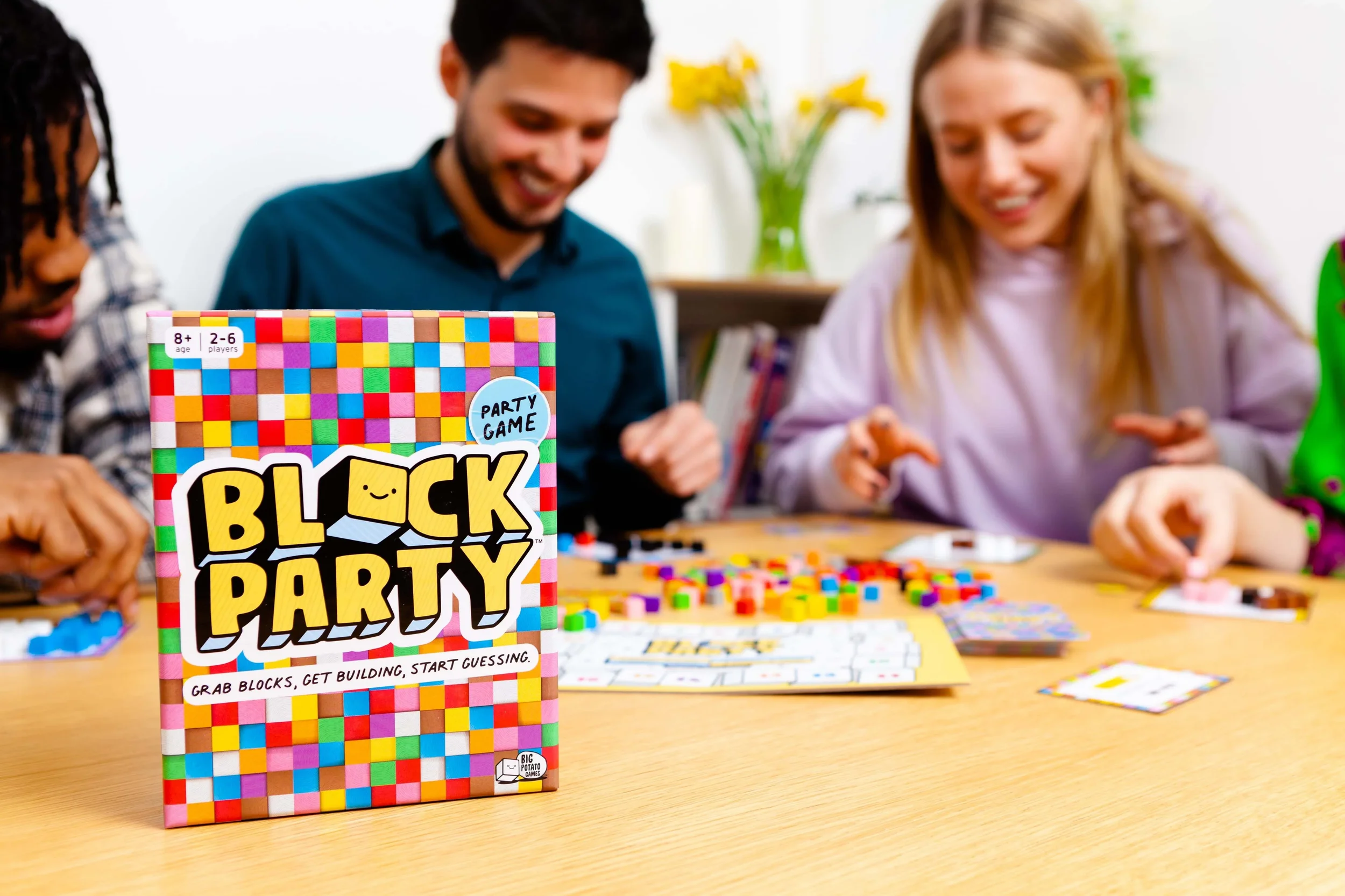
Players: 2–6 (can scale to larger with teams)| Time: 15-30 minutes | Difficulty: Easy
A game which rewards creative skills and lateral thinking. Each round has a Guesser who reveals the rounds challenge (e.g. build with most colours) and each player has a time limit to build something from their list of options from the common pool of coloured blocks. Players score if the Guesser can work out what their creation is and extra points if they meet the round Challenge.
Why it works for offices: Games focussing on creativity and lateral thinking are often overlooked but they can provide a different aspect and engagement for teams and emphasises different skills from the ‘traditional’ ice breaker or game.
7. Cheese Thief
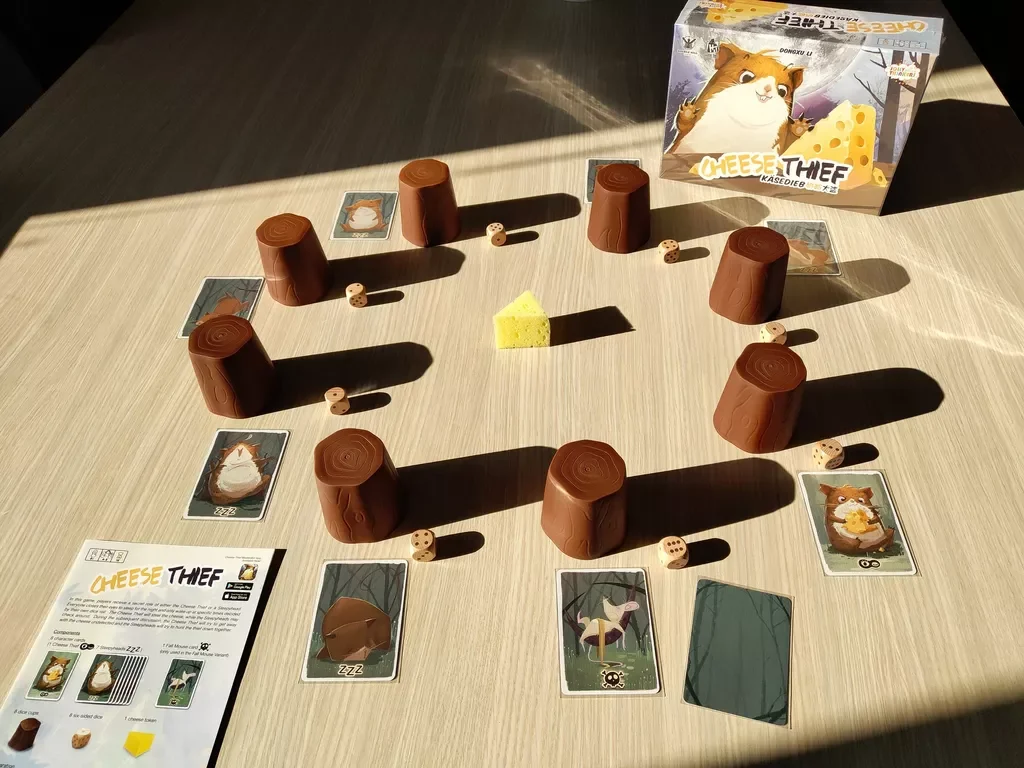
Players: 4 - 8 | Time: 15 - 20 minutes | Difficulty: Easy
Cheese Thief is a social deduction game where most players are regular sleepy mice while one player is the Cheese Thief. Players roll a dice which tells them what hour at night they wake up. During the night phase players wake up and either check the cheese is still there or that it has been stolen. When everyone wakes up they have to determine as a team who the Cheese Thief must be. Sounds easy? It would be if everyone was telling the truth….
Why it works for offices: Rounds are super quick and always generate a lot of fun as the debates start over who is the Cheese Thief is - encourages creative thinking, social reasoning and deduction, team work and quick thinking.
8. Flip 7
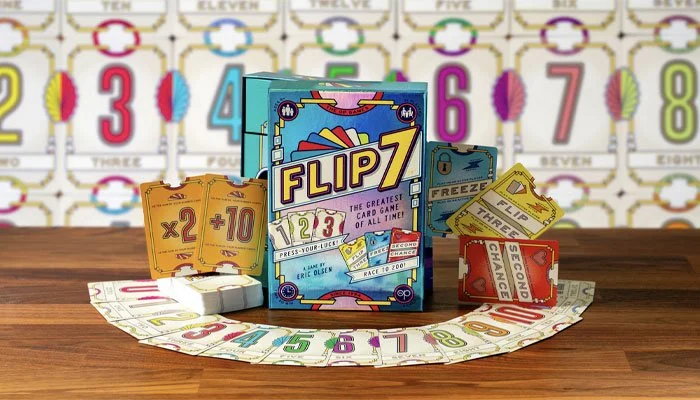
Players: 3–18 | Time: 20 minutes | Difficulty: Easy
A push your luck style game where players are trying to collect unique cards to maximise their score – however if you end up with a number you already have you are ‘bust’ and score nothing that round. Add to this cards which may give you a second chance, or impact other players and it quickly becomes a fun, silly, interactive experience for the whole team.
Why it works for offices: This is a super easy game which is scalable to suit the number of players available and suits any player count. The interaction between players alongside the risk management of how far and how often do you push your luck – too little and you’ll be left behind but too much and you can end up with nothing!
9. The Gang
Players: 3–6| Time: 20 minutes | Difficulty: Medium
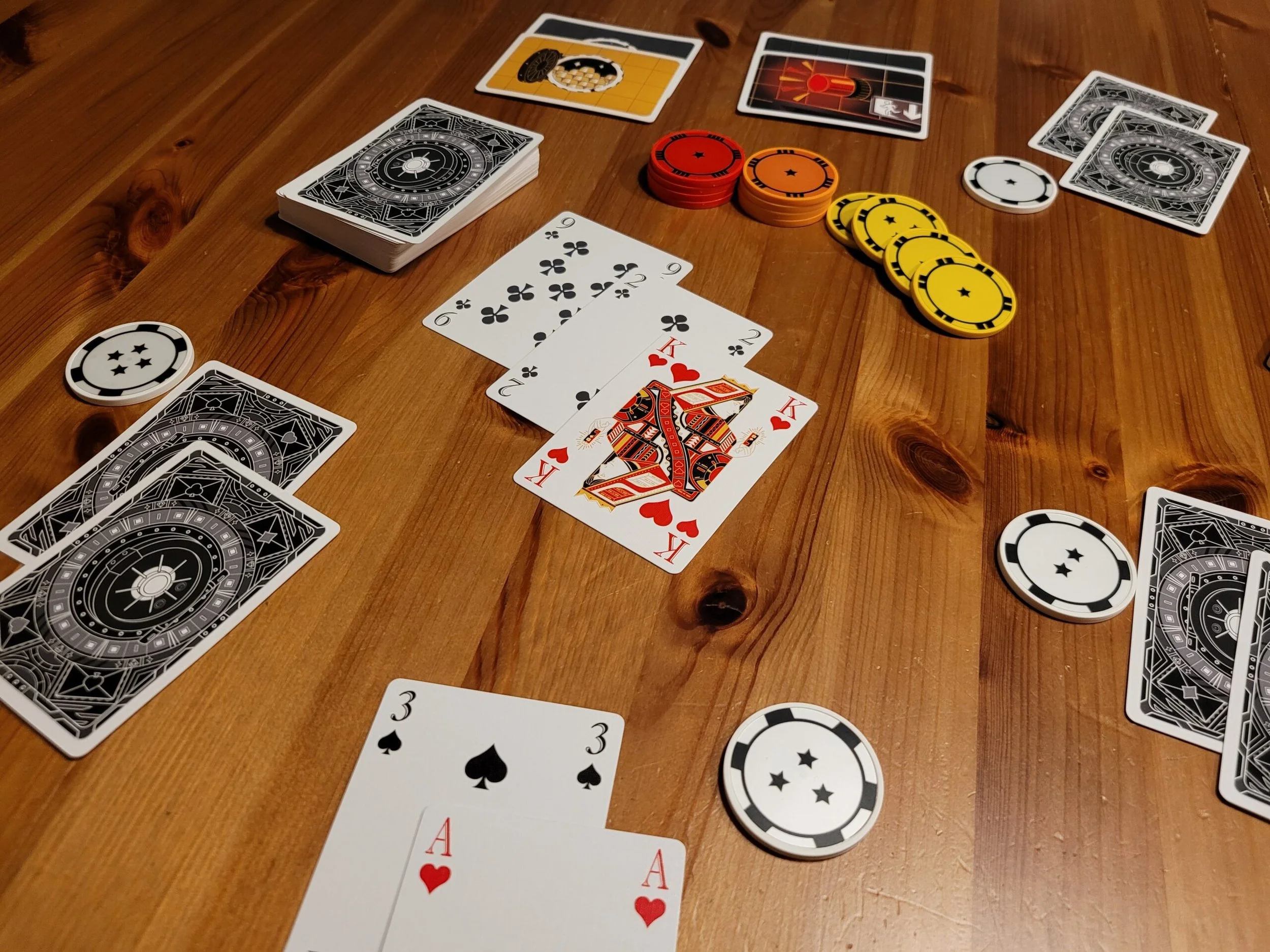
The Gang is a co-operative game where the players are a crew of robbers trying to pull off a series of heists.
This is done by playing Texas Hold ‘Em poker – however you are playing together not against each other. To successfully complete the heist players must determine the correct order of their hands all without any direct communication.
Why it works for offices: This game takes a familiar property in Texas Hold ‘Em and turns it into a surprisingly intense experience. This game really highlights the importance of communication as well as seeing how different people may under or overestimate things compared to others. A fascinating insight into how teams work, and also one of the games which has people wanting ‘one more go’ so they can win this time!
10. Little Tokyo
Players: 2–6 (can scale to more with teams) | Time: 10-30 minutes | Difficulty: Easy
Dexterity games are becoming more and more common and offer something very different to other games.
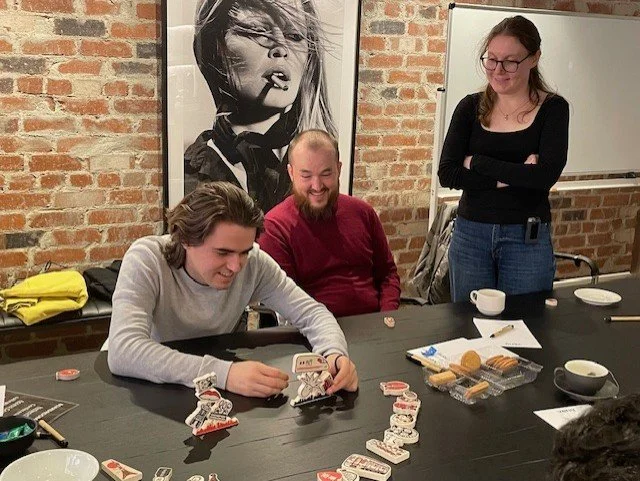
Little Tokyo is sort of Jenga in reverse; on each players turn they have to balance one of the wooden pieces on the Tokyo skylines – sounds easy enough but as they pieces get higher it gets trickier – plus your opponents may set up some awful pieces for your turn.
Why it works for offices: Not everyone wants to play a ‘thinking’ game and sometimes something fun and silly like Little Tokyo is just the ticket. This is the sort of game to bring the team together while also encouraging some fun strategic play to add that little bit of spice.
Which game is right for your team?
A few rules of thumb based on the above list:
First-time group / mixed experience levels? Start with Flip 7, Wavelength, or Little Tokyo.
Competitive team that enjoys strategy? Blood on the Clocktower or The Gang.
Creative team? Codenames or Block party.
Close team with strong rapport? Herd Mentality and Fake Artist.
Short on time? Little Tokyo, Block Party
However at The Travelling Game Café, we have many other games which you can find in our Board Game Library. For each event we work with you to curate a game selection based on your group and your objectives. You don't need to know any of these games in advance, that's our job, you just need to have fun!