How to Plan the Perfect Office Lunch Break (That Everyone Actually Enjoys)
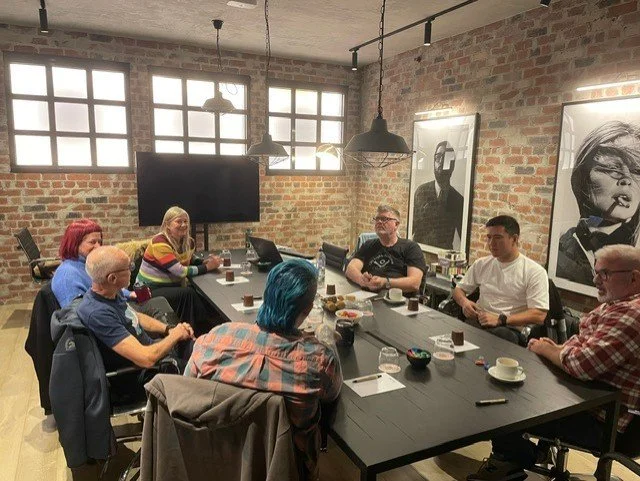
Games are a quick and genuine way for teams to connect in a lunchbreak without taking time from the day
The average office lunch break is 22 minutes. Most people eat at their desk. This is not a critique, it's just reality. But every now and then, it's worth doing something different.
A well-run lunchtime team event can do more for team morale in 60 minutes than a whole afternoon offsite done badly. The key word is "well-run." Here's how to plan one that people genuinely enjoy and actually come back from feeling refreshed rather than more drained.
Start with the basics: what makes a good lunchtime event?
A great office lunch event tends to hit a few criteria:
It respects people's time. One hour means one hour. Anything that runs over starts eating into the afternoon, and resentment follows quickly. Choose an activity with a defined end point built in.
It lets people still actually eat. Obviously one of the key points of a lunch break is to allow people to eat lunch. Whatever you do you need to accommodate for people to be able to still eat while still participating.
It doesn't require preparation. Asking people to watch a pre-read or prepare something for a lunchtime activity adds friction and reduces turnout. The best lunchtime events are completely self-contained.
It works for different energy levels. Lunch hour lands mid-day. Some people are buzzing; others are in a post-morning slump. Your activity needs to meet people where they are rather than demanding peak performance.
It's genuinely fun, not merely "engaging." There's a difference. Fun is involuntary it just happens. "Engaging" is often a euphemism for "fine, but forgettable." Aim for fun.
The format question: structured vs unstructured?
Unstructured time such as "let's all just have lunch together!" sounds appealing but often falls flat. Without a focal point, groups of more than about six people tend to fragment into the same cliques that already exist. You end up with the same conversations you'd have at the coffee machine.
A light structure gives people something to orient around without feeling like they're being managed. Think of it as a scaffold; invisible when it's working well, essential to stop things from collapsing.
Games are ideal for this. They provide just enough structure to create shared focus, while leaving plenty of room for personality and spontaneity.
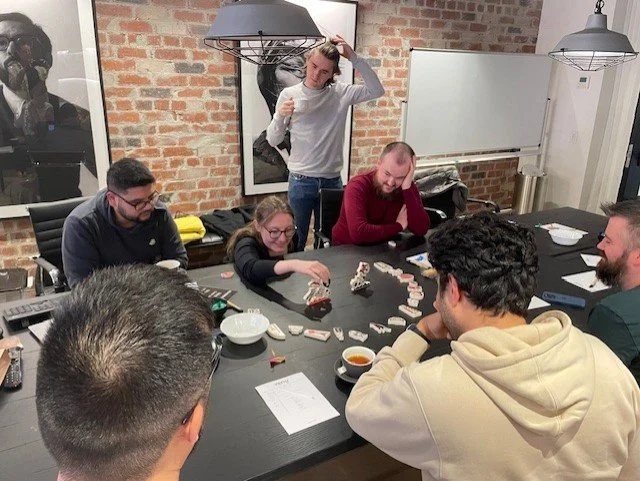
Practical tips for a smooth lunchtime event
Cap the attendance at a sensible number. Lunchtime works best with somewhere between 6 and 20 people. Below that, it can feel intimate to the point of pressure. Above it, you start needing more formal facilitation and splitting into groups becomes necessary.
Sort food logistics in advance. Nothing disrupts flow like people popping out to grab lunch mid-activity. Either arrange catering, ask people to sort their own food beforehand, or choose an activity that works while eating. Board games, for example, are naturally compatible with eating, a bag of chips on the table is basically standard.
Brief everyone beforehand. A quick Slack message or calendar invite note explaining what to expect removes anxiety and improves turnout. "We're doing a hosted board game session, no experience needed, just show up" is all it takes.
Have a host. This is the single biggest factor in whether a lunchtime event succeeds or collapses. A confident, warm facilitator who can read the room, explain rules quickly, and keep energy up makes an enormous difference. It's why having a professional host, rather than nominating a colleague who may or may not be comfortable in that role, is worth it.
What to do about people who "aren't into" the activity
Every team has someone who'll say they're not really a games person, or who has a vague scepticism about structured fun. This is normal and manageable.
A few things that help:
Frame it as low-stakes. "We're just playing some games over lunch" lands better than "we're doing a team building session."
Choose accessible games. Nothing with rulebooks the size of a novel or games that reward extensive prior knowledge. The best lunchtime games can be explained in under two minutes.
Don't make attendance mandatory. Counterintuitively, making it optional often increases uptake and the people who do show up are genuinely present rather than physically there but mentally checked out.
Our lunchtime special: the easiest hour you'll ever organise
At The Travelling Game Café, we built our 1-Hour Lunch Special specifically around this challenge. We arrive at your office before your team does, set everything up, select games suited to your group, facilitate the session, and pack away when it's done.
You don't organise anything except telling people to show up.