The Rise of Social Deduction Games: Why We Can't Stop Lying to Each Other
Something strange has happened to our entertainment habits. Millions of us are spending our evenings trying to figure out who among us is secretly working against the group — and we're absolutely loving it.
Whether you've watched someone dramatically accuse the wrong person on The Traitors, argued until midnight around a kitchen table about who the werewolf is, or found yourself lying through your teeth in a game of Blood on the Clocktower, you've been caught up in one of the biggest cultural waves in modern gaming and television. Social deduction — the art of identifying hidden enemies through conversation, bluffing, and reading human behaviour — has gone from niche hobby to mainstream obsession.
So how did we get here, and what is it about these games (and shows) that hooks us so completely?
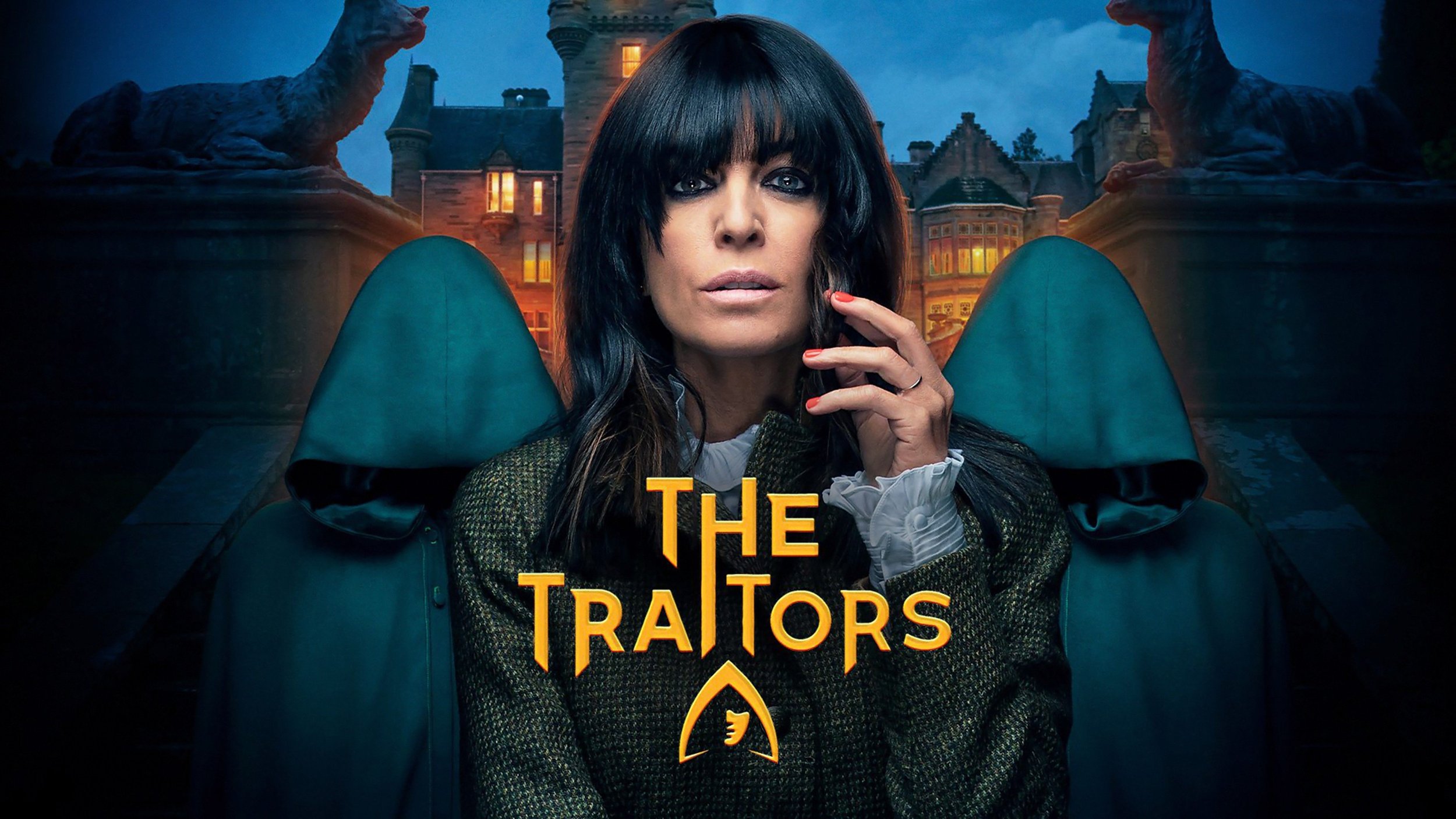
The Traitors UK TV show was the highest rated show in 2025
It Started in a Moscow Psychology Classroom
The lineage of every social deduction game in existence traces back to a single idea: a psychology student at Moscow State University named Dmitry Davidoff, who in 1986 created a game called Mafia as a classroom exercise. The concept was elegantly simple. A small hidden group (the Mafia) knows who each other are. The majority (the Townspeople) don't know anything. Each round, the Mafia eliminates someone. The town debates, accuses, and votes someone out. This continues until one side wins.
What Davidoff had stumbled onto wasn't just a game mechanic — it was a mirror of some very fundamental human psychology. How do we identify deception? How do we build coalitions under uncertainty? How much do we trust our instincts about other people? The game spread from Soviet classrooms to American university campuses through the 1990s, where it became a staple of tech conferences and summer camps. By the 2000s, it had spawned dozens of variants, Werewolf, The Resistance, Avalon, Coup, each adding new wrinkles to the core formula.
Then, in 2020, something extraordinary happened.
Among Us and the Pandemic Spark
Among Us had been quietly available since 2018 with almost no traction. Then the world locked down. Suddenly, people needed ways to socialise at a distance, and a simple game about identifying an imposter aboard a spaceship became one of the most-played games on the planet. At its peak, it was being played by over 500 million people.
More importantly, it introduced the social deduction concept to a massive new audience, people who had never heard of Mafia, had never sat around a table with a deck of special cards, but now understood instinctively what it felt like to accuse a friend, be betrayed by an ally, and argue passionately about who was lying.
The pandemic didn't create the appetite for social deduction. It revealed it.
The Traitors: When Social Deduction Goes Prime Time
Nothing has done more to bring social deduction into the cultural mainstream than The Traitors. The BBC series takes the Mafia formula and stretches it across weeks of filmed reality television, set in a dramatic Scottish castle. A group of contestants work together to fill a prize pot through missions, while a secret subset of "Traitors" among them attempt to avoid detection and pick off "Faithfuls" one by one at nightly roundtables.
The numbers tell the story of how completely it captured the public imagination. The 2025 series launched to an audience of 9.2 million — a record at that point for the show. The final drew nearly 10 million viewers. Then Celebrity Traitors topped even that, with its final watched by 14.9 million people — making it the biggest television audience in Britain in 2025, full stop. A show built entirely on the psychology of bluffing and group deduction was outperforming everything else on television.
Critics noted that the format felt simultaneously fresh and deeply familiar — The Guardian described it as feeling like "a revival of the early, more innocent days of reality TV." The BBC was so confident in its longevity that in March 2026 they announced a three-year deal keeping the show in production until 2030.
What The Traitors understood, and what its enormous success confirmed, is that watching people navigate social deduction is as compelling as playing it yourself. The show is essentially a live board game, broadcast at scale. And once you understand that, you start to see why the gaming equivalent has been exploding at exactly the same time.
Blood on the Clocktower: The Game That Solved the Genre
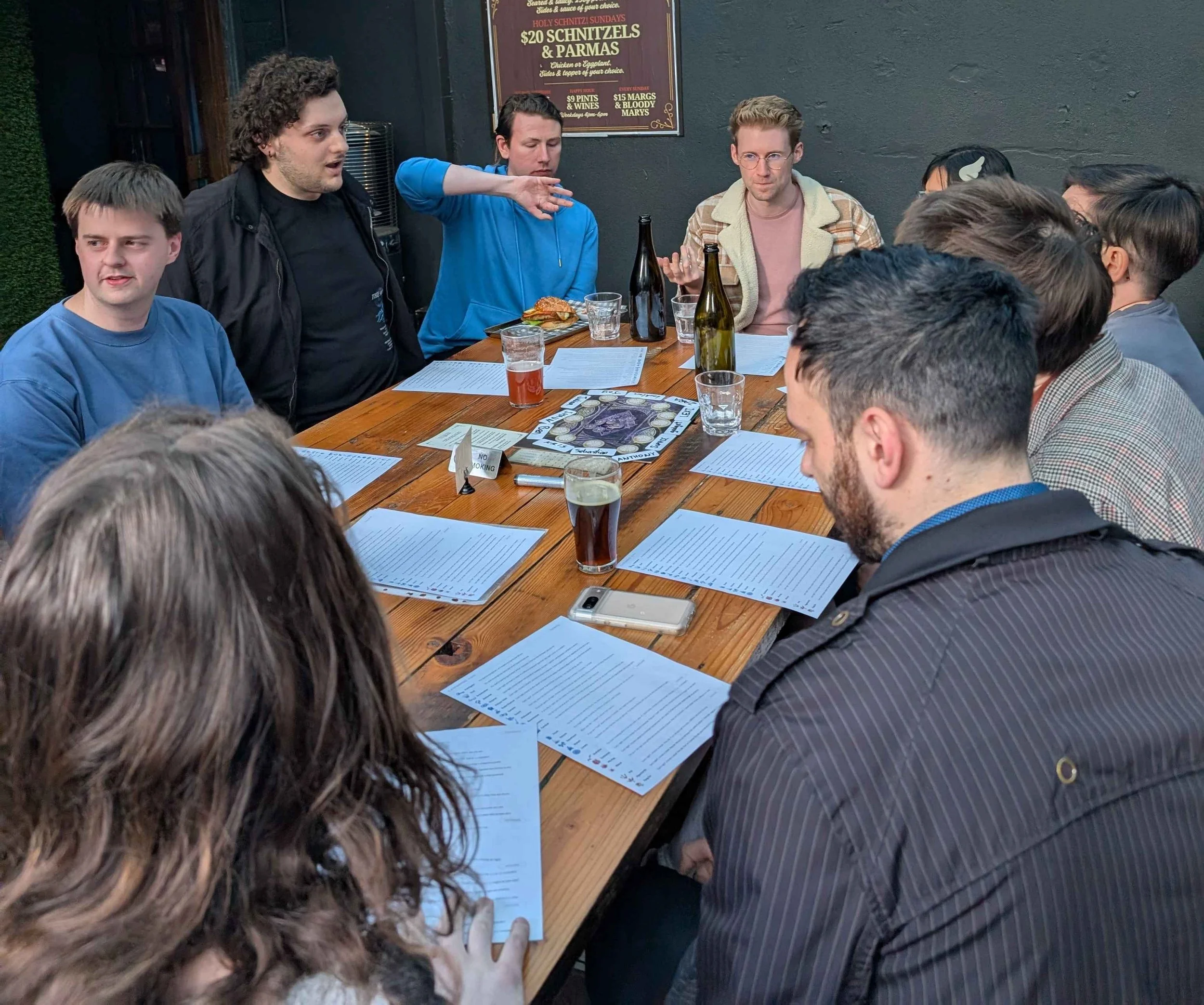
In person game of Blood on the Clocktower
If The Traitors is social deduction for television audiences, Blood on the Clocktower is social deduction for people who want to go deeper than any TV show can take them.
Created by Steven Medway and published by The Pandemonium Institute, Blood on the Clocktower was funded via Kickstarter in 2018, raising over $570,000 against a target of $65,000, a sign of the extraordinary appetite for something new in this space. The game was released in full in 2022, and the response from the gaming community has been something rarely seen: almost unanimous declaration that it is the best social deduction game ever made.
The premise has the familiar bones of the genre. A small town in Ravenswood Bluff is haunted by a demon. Most players are Townsfolk trying to identify and execute it. A smaller group of Minions and the Demon itself work against them, lying and manipulating from within. But what Blood on the Clocktower does differently is everything else.
For a start, there is the Storyteller. The Storyteller takes on a facilitative role, running the game as a kind of Gamesmaster, making decisions that affect balance and flavour, introducing information through private conversations with players. This alone transforms the experience from a game into something closer to collaborative theatre.
Then there is the question of player elimination — the great problem that has plagued the genre since Mafia's earliest days. In traditional social deduction games, being eliminated early means sitting and watching everyone else have fun for potentially a long time. Blood on the Clocktower solves this ingeniously: dead players keep their vote. They remain in the game, contributing to discussions, with one precious voting token to use when it matters most. Nobody is truly out until the game ends.
The role variety is staggering. The base game alone contains dozens of distinct characters across multiple factions, each with unique abilities that interact with other roles in intricate ways. No two games play the same. A character that seemed useless in one session becomes the pivotal information source in another. The Storyteller can tune the experience in real time, making things harder or easier, more chaotic or more controlled, based on the energy of the room.
Blood on the Clocktower is appearing again and again. It has been adapted into a live comedy show performed at the Edinburgh Festival Fringe. It is streamed regularly on Twitch. The Stranger Things cast have talked about how they have been playing it. Populat youtube channels are now posting themselves playing online. Behind all of this it has also developed one of the most passionate and creative player communities.
If you've watched The Traitors and found yourself wanting to be in that castle, Blood on the Clocktower is the closest a board game has ever come to delivering that experience.
Why Does It Work So Well?
The obvious question is: what is actually going on when we play these games? Why does lying to your friends for an hour feel so exhilarating? Why does being caught feel genuinely funny rather than shameful? Why do we keep coming back?
The psychology is well documented, if endlessly fascinating. Social deduction games create a safe container for behaviours that carry real social risk outside of it. Lying, manipulation, coalition-building, reading microexpressions, trusting your gut against all evidence — these are things we navigate in real life with real consequences. In a game, the stakes are delightfully low, but the emotional engagement is entirely real.
There's also the matter of what you learn about the people you're playing with. Thirty minutes into a game of Blood on the Clocktower, or watching someone sweat through an accusation on The Traitors, you gain genuine insight into how that person thinks under pressure. Do they panic and deflect? Do they go quiet and strategic? Do they commit to a position or waffle when challenged? This is information that doesn't come easily in ordinary social situations, and it's part of why these experiences feel so connective. You leave having genuinely seen something real about each other.
And then there is the stories. Every session of Blood on the Clocktower generates a narrative unique to that group of people — the unexpected betrayal, the correct accusation that somehow nobody believed, the dead player who used their final vote to turn the tide of the game. These stories follow you out of the room. They come up at dinner weeks later. They become shared mythology between the people who were there.
This is what The Traitors understood instinctively, and why watching it feels so different from watching other reality television. The producers aren't manufacturing drama — they've just created the conditions for social deduction to happen, and then pointed cameras at it.
The Genre Keeps Evolving
The social deduction renaissance hasn't stopped at Blood on the Clocktower and The Traitors. The genre is in active, creative ferment. Designers are finding new ways to introduce hidden information, new solutions to old problems, new themes and settings that bring different kinds of players to the table.
Lighter entry points like A Fake Artist Goes to New York and The Chameleon bring the spirit of deduction and hidden knowledge to people who might balk at a longer game. The success of these games has expanded the audience for the more complex titles, creating a pipeline of new players who are hungry for the next level.
Meanwhile, the cultural conversation around The Traitors has made social dynamics; who to trust, how to read people, when to take a risk on your instincts, feel like genuinely interesting territory for mainstream entertainment. That conversation is happening at office water coolers, in group chats, at dinner tables. And the people having those conversations are, increasingly, discovering that the board game world has been exploring exactly these questions for decades.
Come and Try It
At The Travelling Game Café, we run hosted social deduction experiences as part of our corporate and team sessions. If your team has been talking about The Traitors or you're curious what Blood on the Clocktower actually feels like from the inside, we can bring both the games and the expertise to run them well.
If you want to try other games which have social deduction elements such as Cheese Thief, The Chameleon, Fake Artist in New York, One Night Ultimate Werewolf and many others these can be a fantastic and easy entry point for people and are available too.
The best way to understand the genre is to play it. And the best way to play it is with a host who knows how to set the right tone, pick the right game for your group, and make sure even first-timers feel immediately at home.
Get in touch to find out more →